Fruit Tree Care in Sacramento: What It Actually Takes to Keep a Backyard Orchard Producing
A few years back, I stood in a backyard in Carmichael with a client who wanted her old peach tree gone. It hadn't produced anything worth eating in three seasons — small, mealy fruit that the squirrels got to before she did. She'd already priced out a stump grinder.
I asked her to give it one more year, on one condition: let us actually take care of it.
That tree had been planted well, probably a decade earlier, and then left to fend for itself — no structural pruning, no consistent watering schedule, no attention paid until leaves started curling and fruit stopped forming. It wasn't a bad tree. It was a neglected one. By the next August, she was giving peaches away to neighbors.
That's the thing about fruit trees that most people don't find out until it's almost too late: planting one is the easy part. Keeping it healthy and productive year over year is where most home orchards quietly fall apart.
Why fruit trees need more than "set it and forget it"
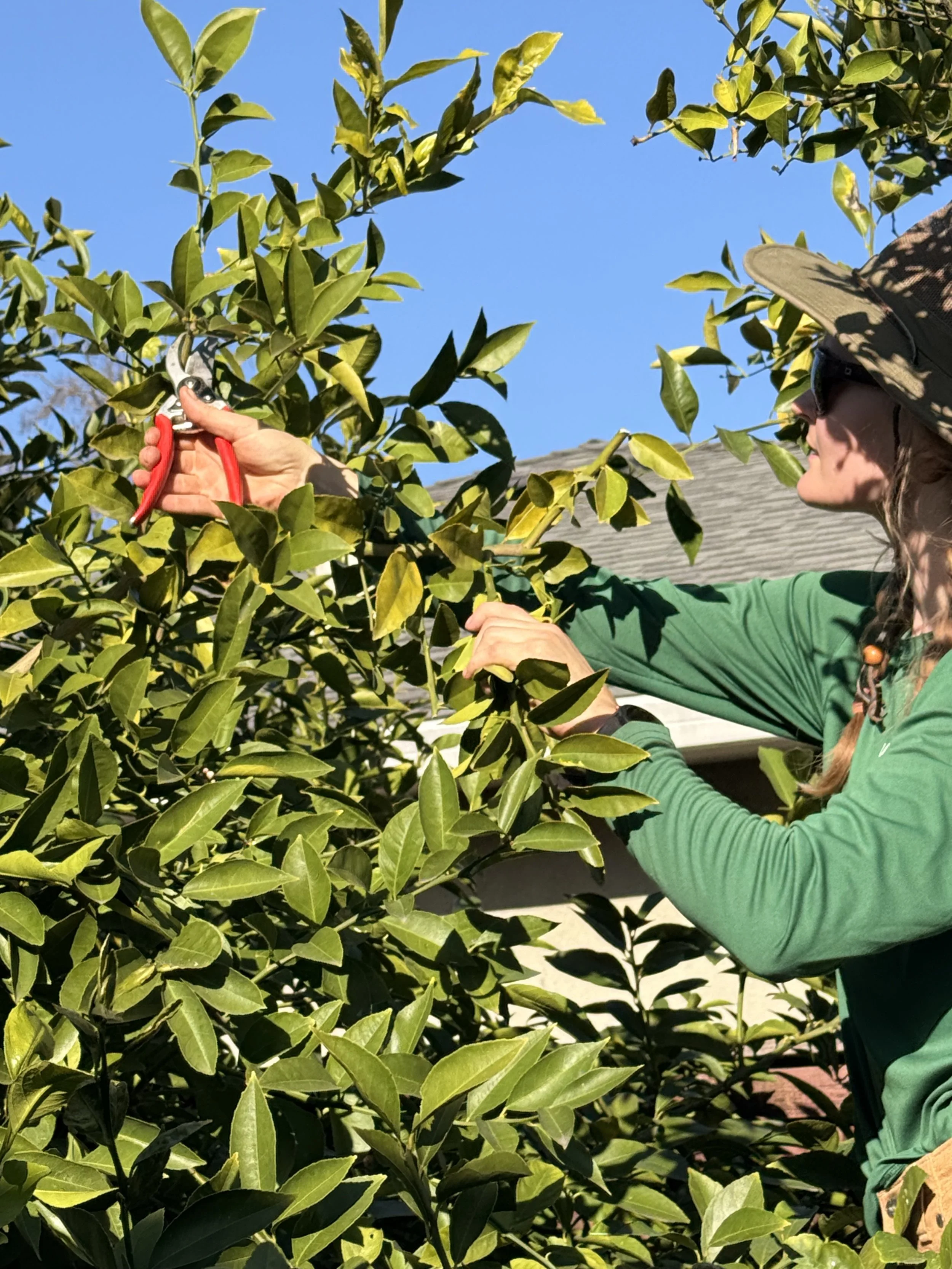
A fruit tree isn't a shade tree. You're asking it to do something much harder than just standing there and growing — you're asking it to produce a heavy, sugar-rich crop every single year, on a schedule dictated by Sacramento's specific climate. That takes structural pruning to keep the canopy open and the fruit reachable, irrigation that shifts as the seasons change, and enough attention to catch pest and disease pressure before it costs you the harvest.
Right now, in mid-September, that means something specific for Zone 9b yards: mid-season apples like Fuji and Gala are coming ripe, along with Asian pears, so it's harvest-watching season for a lot of our clients. It's also the point in the year where we start dialing irrigation back — the days are shorter and cooler than they were in August, and trees that are still getting peak-summer watering can end up stressed instead of helped. It's a small adjustment, but it's the kind of thing that's easy to miss if you're not paying attention to the tree on a regular basis.
That's really what fruit tree care comes down to for us: paying attention on a schedule, not just when something looks wrong.
How we actually approach it
Fruit tree care, done right, is a year-round rhythm rather than a single visit. Structural and seasonal pruning timed to each tree's fruiting habit. Irrigation adjustments as the seasons shift — dialing back in fall, easing up during the hottest stretch of summer.
Peach leaf curl prevention is a good example of how this plays out. It's a fungus that overwinters on the bark and bud scales of peach and nectarine trees, and once you see the telltale puckered, reddish leaves in spring, the damage for that season is already done — spraying at that point doesn't undo it. So we time a copper-based spray for dormancy, after the leaves have dropped and before buds swell in late winter, when it can actually knock the fungus back before it gets a foothold. We pair that with garlic planted around the base of peach and nectarine trees as a companion planting — a simple, low-intervention habit that helps keep fungal pressure down in the soil year-round, alongside the dormant spray rather than instead of it.
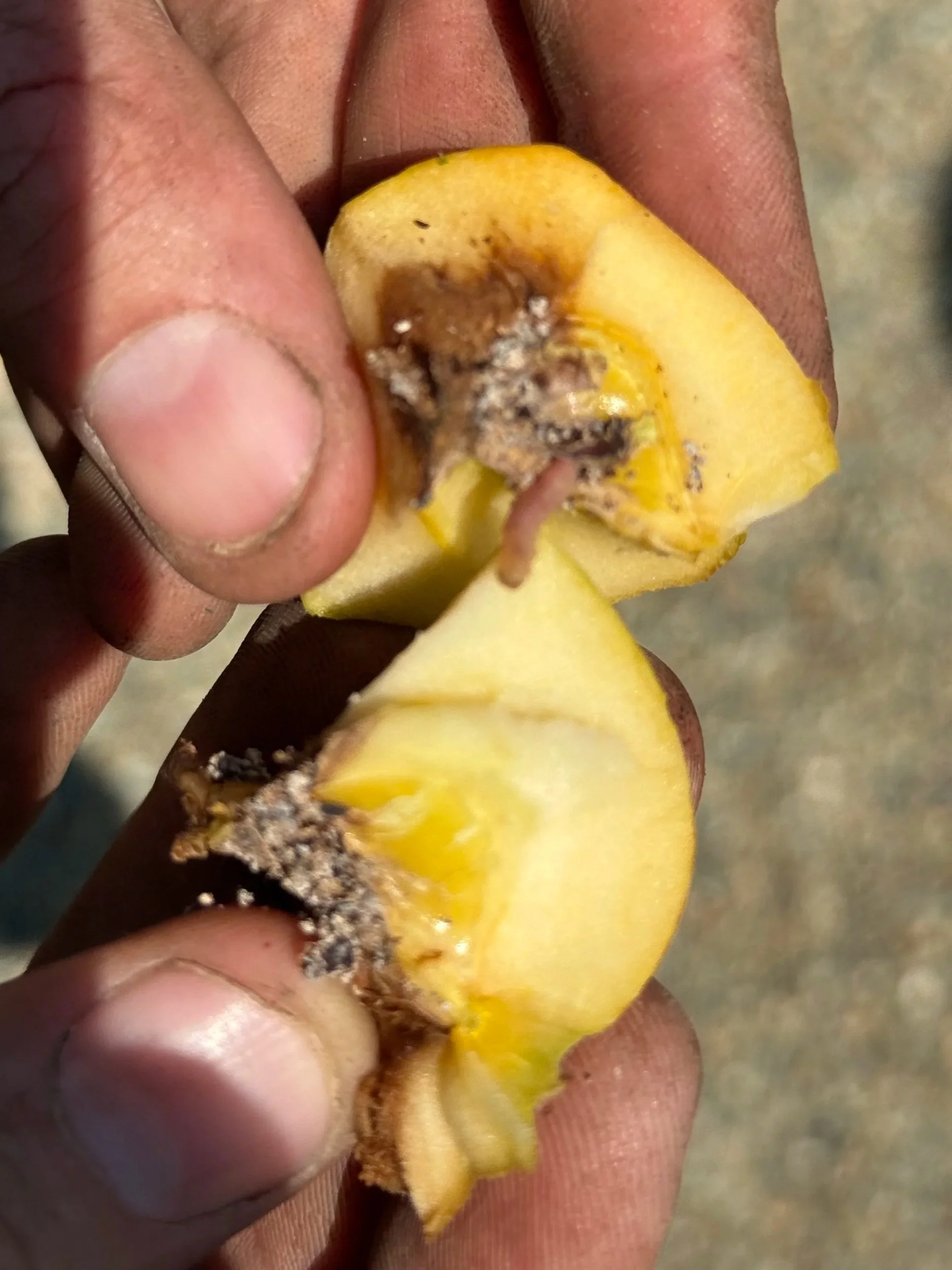
Codling Moth
Regular monitoring for things like codling moth rounds it out, since catching an early infestation is a lot less work than dealing with a season's worth of damaged fruit. We don't fertilize — we've found that a tree that's well-pruned, correctly watered, and planted in healthy soil to begin with generally doesn't need it, and we'd rather solve the underlying issue than mask it.
For established trees that have been neglected — like that peach tree in Carmichael — it often starts with a season or two of corrective pruning to bring the canopy back into a healthy, manageable shape before settling into a maintenance rhythm. We're not going to pretend every tree is salvageable, or that a tree that's truly declined can be fixed in one visit. Fruit tree health is a long game, and we try to be honest about what a realistic timeline looks like before we start.
If your trees haven't been feeling like part of the yard lately
Fruit trees planted with good intentions and then left to figure things out on their own is one of the most common situations we walk into. Often the tree is still worth keeping — it just needs someone paying attention to it on a schedule. That’s where Yard to Fork comes in and can help. Schedule a consultation or give us a call to talk about what’s going on and we can recommend the next best steps.
Already know you want fruit tree care and maintenance? Let’s get you on the schedule today!